How an SEO Roadmap Generator Turns Data into a Real Action Plan
Why Most SEO Plans Stay Stuck in the Spreadsheet
Every SEO professional has been there. You run a site audit, export a report, and end up staring at a list of two hundred issues. The temptation is to fix everything at once, but that approach leads to burnout, scattered effort, and no measurable win. What you need instead is a coherent sequence of tasks tied to a specific goal. That is where an seo roadmap generator becomes useful. It takes all the noise from your tools and transforms it into a step-by-step schedule that makes sense for your team, your budget, and your timeline.
I have watched teams spend weeks debating whether to rewrite old blog posts or build new landing pages first. Without a structured plan, the conversation loops. With a proper roadmap, you can settle those debates in minutes because every task is ranked by potential impact and the effort required. That shift in workflow is what separates companies that improve their organic traffic from those that just stay busy.
Understanding the Core of a Solid SEO Roadmap
An seo roadmap generator is not a magic black box. It is a logical engine that pulls signals from multiple sources and arranges them into a timeline. The best ones start with a clear diagnosis of your current state. That means integrating data from Google Search Console, Google Analytics, and a dedicated rank tracker like Serpstat or Ahrefs. You need to know which pages already earn impressions, which queries bring traffic, and where the gap is between your current ranking and the first page.
Once you have that baseline, the generator looks at metrics like keyword difficulty score and the presence of SERP features. For example, if your target keyword shows a featured snippet or a "People also ask" box, the roadmap should reflect that by prioritizing structured content that answers the question directly. If the keyword difficulty score is above seventy, the generator might suggest a longer campaign that first builds topical authority through related terms.
Moving Beyond the Keyword List
Many SEOs become obsessed with keywords alone. But a roadmap that only lists keywords is not enough. You also need to understand entity salience and how search engines interpret the meaning of your content. This is where TF-IDF analysis and LSI keywords come into play. TF-IDF analysis helps you identify which terms your competitors use that you are missing, so you can adjust your content to match the semantic depth that Google expects. LSI keywords fill in the contextual gaps, making your article more relevant without stuffing it with the same exact phrase.

I remember working on a site that sold gardening tools. The primary keyword was "pruning shears." But after running TF-IDF analysis, we realized that every top-ranking page also mentioned "anvil mechanism," "bypass blade," and "hand fatigue." Those terms were not synonyms, they were supporting concepts that signaled expertise. The roadmap generator we used at the time automatically flagged those gaps and scheduled content updates to fill them.
The Role of Competitor Intelligence
No SEO roadmap is complete without a hard look at the competition. This is where backlink gap analysis and content gap analysis become critical. Backlink gap analysis shows you which domains link to your competitors but not to you. Those are your quick wins for outreach and guest posting. Content gap analysis reveals topics your competitors cover that you have not published yet. When combined with competitor URL intersection, you can see exactly which pages on competing sites overlap with your own and where they dominate.
Tools like SEMrush and Moz offer features that feed directly into a roadmap generator. SEMrush’s domain vs. domain tool, for instance, can export a list of overlapping keywords and missing opportunities. Moz’s link intersect tool does the same for backlinks. The generator then prioritizes these gaps based on your site’s current authority. If you are a new site, chasing high-DR competitor links might be a waste of time. The roadmap should push you toward achievable targets first.
Structuring Content Around Topics, Not Just Keywords
Modern SEO demands a topic cluster model instead of isolated articles. A topic cluster model starts with a pillar page that covers a broad subject, then links to cluster pages that address specific subtopics. For example, a pillar page about "content marketing" might link to posts about "email list building," "social media scheduling," and "SEO writing." The roadmap generator should identify which pillar topics have the strongest search potential and which cluster pages are missing.
This approach aligns with how search engines understand entities. Entity salience means that Google recognizes the main subject of your page and associates it with related concepts. If your site has a strong topic cluster model, every internal link reinforces that association. The roadmap generator can map out the order in which you should create those pages to build authority gradually.
On-Page Optimization and Technical Checks
Once the content strategy is set, the roadmap shifts to on-page and technical adjustments. This is where tools like RankMath and Yoast SEO come into play. They provide real-time feedback on title tags, meta descriptions, heading structure, and keyword placement. But a roadmap generator goes further by scheduling these optimizations in batches. It might tell you to update title tags for all pages targeting keywords with a difficulty score below twenty first, because those changes have the fastest payoff.
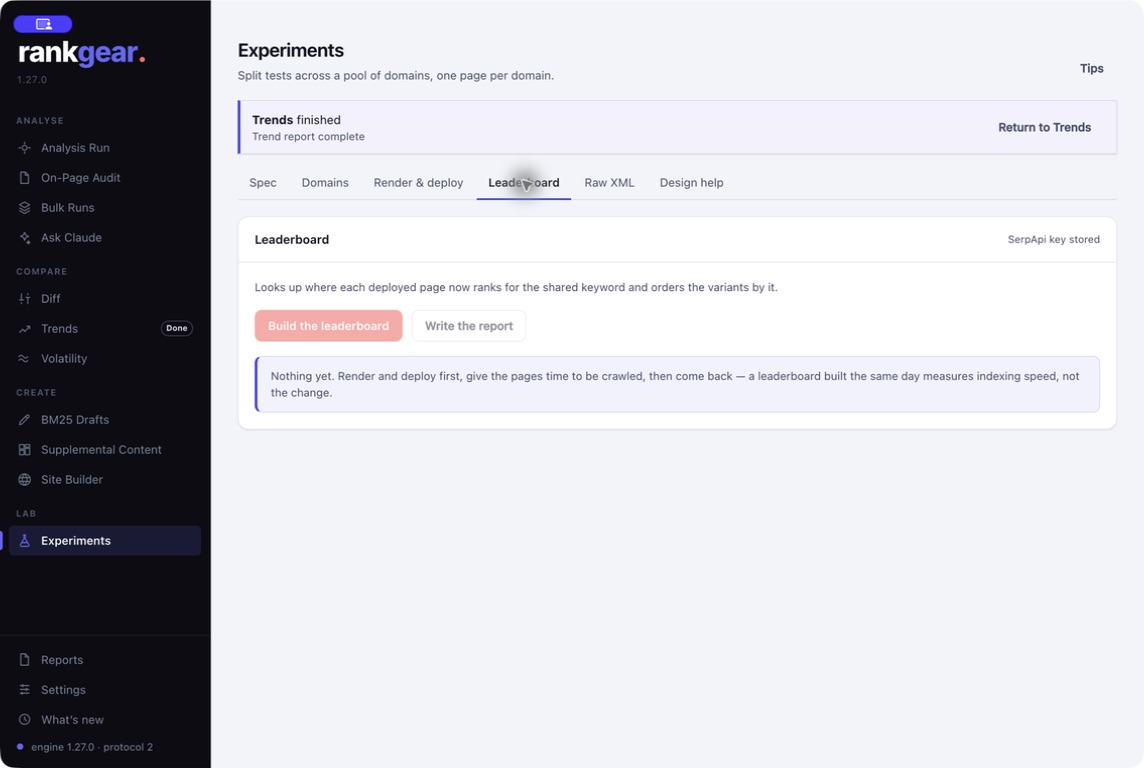
Technical SEO often gets pushed aside because it feels invisible. But Google Page Experience and core web vitals are ranking factors that can hold back even the best content. The roadmap should include specific dates for improving Core Web Vitals scores, like fixing Largest Contentful Paint delays or reducing Cumulative Layout Shift. A good generator will check your site’s performance data from Google Search Console and Google Analytics to prioritize the pages that cause the most friction.
Practical Examples of a Roadmap in Action
Let me give you a concrete scenario. Suppose you run an e-commerce site selling hiking gear. You have two thousand product pages and fifty blog posts. Your SEO roadmap generator pulls data from Ahrefs and Serpstat and finds the following:
- Your blog post about "best hiking boots for wet trails" ranks on page two, but the keyword difficulty score is thirty-five. A few content updates could push it to page one.
- Your product pages for "waterproof jackets" lack internal links from relevant blog posts, creating a content gap. The generator schedules five new cluster articles around jacket care and layering.
- Backlink gap analysis shows that three outdoor gear review sites link to your main competitor but not to you. The roadmap includes a two-week outreach campaign targeting those domains.
- Core Web Vitals scores are poor on mobile. The generator prioritizes those fixes before the next Google Page Experience update.
That sequence is not random. The roadmap generator calculated the effort-to-impact ratio for each item and arranged them so that early wins build momentum for the harder tasks later.
What a Generator Cannot Do (and Why That Matters)
An seo roadmap generator is not a replacement for human judgment. It cannot read the nuance of your brand voice or know that your CEO hates the color of a particular call-to-action button. It also cannot negotiate with a web developer who insists on using a different framework. What it does is give you a defensible starting point. You can look at the timeline and say, "Here is why we are fixing meta descriptions before we rebuild the navigation." That clarity is valuable when you need to justify your decisions to stakeholders.
Tools like SEMrush, Ahrefs, Moz, and Serpstat all offer some form of project management or task generation. But the difference between a simple checklist and a true roadmap generator is the logic behind the ordering. A checklist tells you what to do. A roadmap generator tells you what to do first and why. It considers interdependencies, like the fact that you cannot optimize a page for a keyword until you have written the content, and you cannot build links to that page until it is live and indexed.
Practical Tips for Implementing Your Roadmap
Start by connecting your data sources. Make sure Google Search Console, Google Analytics, and your chosen rank tracker all feed into the generator. If you use RankMath or Yoast SEO, export your on-page scores so the generator can factor them in. Manually review the first two weeks of tasks to confirm they align with your business priorities. For instance, if your company is launching a new product line next month, the roadmap should include content and link building for that launch, even if the keyword difficulty score is higher than usual.
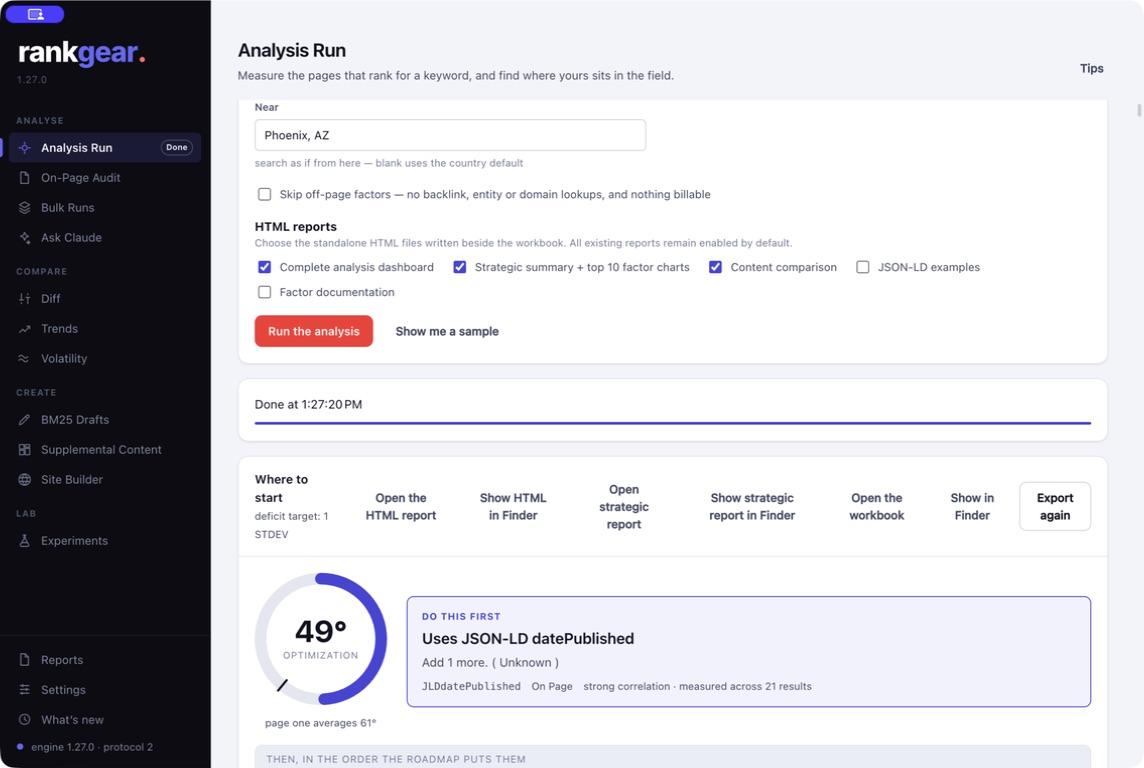
Review the roadmap monthly. SEO changes fast. Google updates its page rank algorithm several times a year, and competitors adjust their strategies. A static plan becomes outdated. The generator should allow you to re-run the analysis with fresh data and compare the new timeline with the old one. That comparison alone can reveal whether your efforts are working or if you need to pivot.
Finally, communicate the roadmap to everyone involved. Developers, writers, and executives all benefit from seeing the sequence. When a developer understands that fixing Core Web Vitals on the checkout page is scheduled before tweaking the blog layout, they can plan their sprints accordingly. When a writer sees that the topic cluster model requires three cluster posts before the pillar page, they can research and outline in the right order.
Bringing It All Together
An SEO roadmap generator is not a luxury. It is a practical tool that turns data from Serpstat, Ahrefs, SEMrush, Moz, Google Search Console, and Google Analytics into a clear action plan. It accounts for keyword difficulty score, backlink gap analysis, content gap analysis, SERP features, TF-IDF analysis, LSI keywords, the topic cluster model, entity salience, and Google Page Experience signals like core web vitals. It helps you decide when to use RankMath or Yoast SEO for on-page tweaks and when to focus on competitor URL intersection for new link opportunities. But its real value is in the ordering. By prioritizing tasks that build on each other, it saves you from the chaos of trying to do everything at once. If your team still relies on a shared spreadsheet and a group chat, try running your next project through a proper roadmap generator. The difference in focus and speed will be clear within a month.